Unlocking the Secrets of Ancient Egyptian Junk Journal Backgrounds
The Allure of Authentic Antiquity in Modern Crafting
There's a particular kind of magic in holding a piece of history. The weight of a stone, the faded pigment on a wall, the intricate symbols that once told stories of gods and kings. For crafters, journalers, and designers, capturing that essence is a powerful creative goal. This is precisely where an Ancient Egyptian Junk Journal Background collection excels. It's not just a set of papers; it's a curated portal to the past, designed to infuse your projects with the authentic texture, mystery, and grandeur of a civilization that has fascinated humanity for millennia.
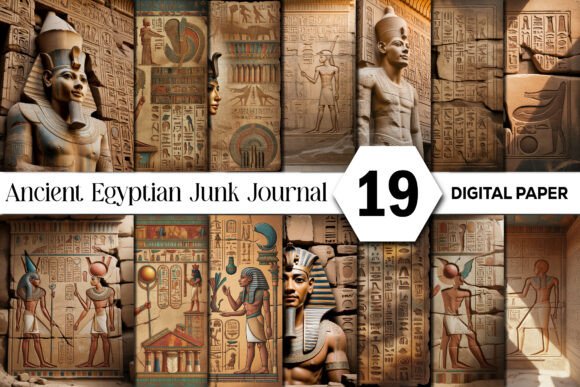
Imagine the visual personality: detailed hieroglyphics that aren't mere doodles but feel etched by a scribe's careful hand. Pharaoh statues with stoic, powerful profiles emerge from digitally aged surfaces. Temple carvings show the wear of centuries, their lines softened by time. The sandstone textures are the foundation—warm, gritty, and subtly varied, providing a neutral yet rich base that makes every layer applied on top feel grounded and real. This collection isn't about a polished, perfect look; it's about authenticity. It embraces the beauty of decay, the narrative of erosion, and the quiet power of artifacts. The overall appeal is one of historical depth, making it a standout design asset for anyone working on projects that benefit from a touch of the timeless and the tactile.
Where Ancient Textures Meet Modern Design Needs
The versatility of this Ancient Egyptian Junk Journal Background is one of its greatest strengths. Its applications stretch far beyond the obvious scrapbooking page. For the brand strategist or entrepreneur, these textures can form the bedrock of a unique brand identity. Think of a boutique hotel, a specialty coffee roaster, or a jewelry line inspired by ancient motifs. Using these backgrounds in logo design concepts, packaging mockups, or website hero images can instantly communicate a sense of history, craftsmanship, and enduring value. The texture adds a layer of sophistication and story that flat, modern colors often lack.
For publishers and content creators, the backgrounds are invaluable. A blogger writing about history, travel, or even fantasy fiction can use them as social media graphics to create a cohesive, immersive aesthetic. In editorial design, they can serve as chapter dividers, quote backgrounds, or full-bleed pages in a digital magazine, setting a specific mood. Marketers can leverage them in campaign materials for events, product launches, or educational content that aims to feel substantial and credible. The high-resolution 300 DPI ensures that whether it's printed as a large poster or viewed on a high-density screen, every detail remains crisp. This is a premium font companion—a creative font paired with these textures can elevate a simple invitation or certificate into a memorable keepsake.
Practical Integration: From Download to Design
So, you've acquired this digital treasure trove. How do you integrate it effectively? First, consider the project's tone. These backgrounds have a strong personality. They are best suited for projects where visual hierarchy and brand perception lean towards the historical, the luxurious, the mysterious, or the artisanal. They might overwhelm a minimalist tech startup's branding but would be perfect for an archaeology museum's newsletter or a high-end chocolate box.
Testing is key. Don't just slap a serif font over a hieroglyphic background and call it done. Experiment with font pairing. A clean, modern sans serif font can create a striking contrast, making the text highly readable while letting the background shine. A handwritten font or script font can evoke a more personal, journal-like feel. Always prioritize readability. Use the textures as full backgrounds for large elements, or as accent panels and borders. Layer them with solid color blocks to create space for text. In web design, consider using them as a textured footer or a hero section with a dark overlay to ensure navigation and buttons remain functional.
Remember the included styles. With 19 backgrounds, you have a palette to create consistency across a series. Use the sandstone texture as your base, the hieroglyphics as a recurring motif, and the pharaoh carvings as occasional focal points. This builds professionalism and recognition. The commercial-use license is a significant benefit, allowing small business owners and designers to incorporate these textures into products for sale—whether that's printable journals, digital planners, or physical merchandise—without legal ambiguity.
A Final Note on Historical Inspiration
Working with these materials is more than a technical exercise; it's an act of connection. As you layer a vintage map over a sandstone texture or pair a modern quote with ancient symbols, you're participating in a long tradition of storytelling through visual means. The Ancient Egyptian Junk Journal Background collection provides the tools. Your creativity provides the context. Use it to tell a story that feels both ancient and utterly relevant, to build a brand that stands the test of time, or simply to create a personal journal that feels like a discovered artifact. The depth is there, waiting to be explored.