Capturing Holiday Magic with Vintage Christmas Stamp Paper
There is a specific, nostalgic weight to holiday correspondence from decades past. It isn’t just about the text; it’s about the tactile experience—the faint impression of a postmark, the slightly faded hues of a stamp, and the intricate borders that framed a sender's well-wishes. As designers and content creators, we often struggle to replicate that authentic, "lived-in" aesthetic in our digital work. Modern high-definition assets can sometimes feel too sterile, too perfect, lacking the soul of mid-century ephemera. This is where the Vintage Christmas Stamp Paper collection steps in, bridging the gap between high-resolution utility and historical charm.
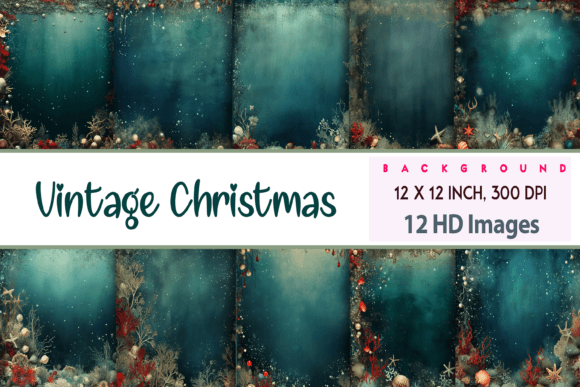
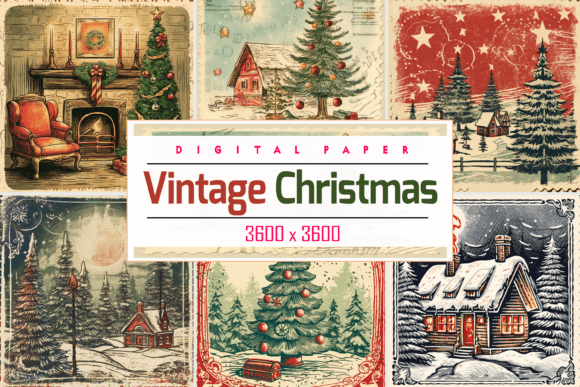
This collection consists of 17 distinct HD images, offering a robust library of textures that feel genuinely timeless. Each file is rendered in PNG format at a massive 3600 x 3600 pixels (12" x 12") and a crisp 300 DPI. This isn't just a small texture tile meant to be repeated awkwardly across a webpage; these are substantial design assets intended for heavy lifting in professional environments. The file sizes, ranging from 10 to 20 MB per design, indicate that the integrity of the artwork has been preserved. You aren't getting a compressed, artifact-laden JPEG; you are getting the actual art size, ensuring that when you zoom in to adjust the composition, the details remain sharp.
The Anatomy of the Aesthetic: What Makes These Backgrounds Work?
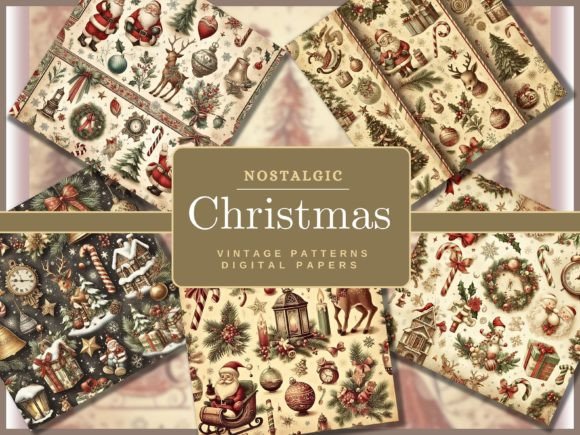
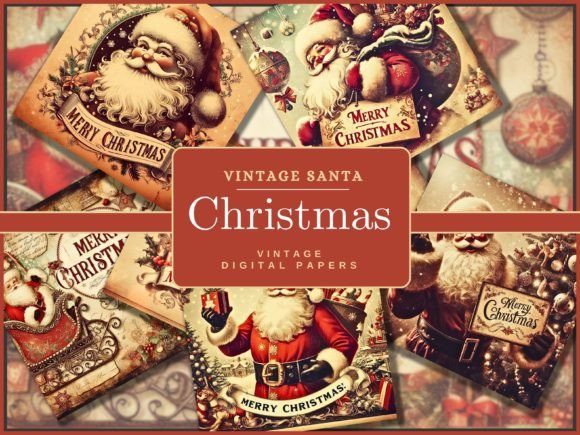
When we talk about vintage design, we are often discussing a combination of color theory and distress. The Vintage Christmas Stamp Paper collection leans heavily into the "colorful design" aspect of the era it represents. We aren't looking at the muted, desaturated filters often found in modern Instagram presets. Instead, think of the rich, saturated reds, forest greens, and golds that defined holiday palettes from the 1940s through the 1960s.
The visual personality of these backgrounds is defined by their "non-transparent" nature. Unlike a simple PNG overlay with a transparent background—which requires you to layer it over a solid color—these files come with their own grounding. They have a distinct "tooth" to them, mimicking the grain of aged paper or cardboard. This texture is crucial for brand identity work because it adds a layer of depth that flat digital colors cannot achieve. The designs feature the hallmarks of classic typography layouts: intricate scrollwork, faux perforations reminiscent of stamp edges, and vignettes that draw the eye inward.
For the creative professional, this means the "background" is actually a composition starter. You aren't just placing a texture behind a headline; you are building a scene. The high-resolution nature of these files ensures that the subtle noise and paper fibers are visible, which lends credibility to the final output. In an era of AI-generated smoothness, this kind of authentic, high-quality texture signals craftsmanship to the viewer.
Strategic Applications: From Branding to Editorial Layouts
Understanding the asset is one thing; knowing where to deploy it is another. The versatility of Vintage Christmas Stamp Paper makes it a valuable addition to various workflows, particularly for those in marketing, web design, and editorial design.
Elevating Brand Identity and Packaging
For small business owners, particularly those in the artisanal or handmade sector, the holiday season is the busiest time of year. Packaging design can make or break a customer's unboxing experience. Using these backgrounds for box inserts, tissue paper patterns, or hang tags creates an immediate emotional connection. It suggests that the product inside is crafted with care and tradition. A vintage aesthetic often signals "premium" and "established," helping a new brand borrow equity from the past to build trust in the present.
Digital Marketing and Social Media
Social media algorithms favor engagement, and nostalgia is a powerful engagement driver. Social media graphics utilizing these textures stand out in a feed dominated by flat, vector-based minimalist designs. Imagine a Facebook banner or an Instagram Story where your promotional text sits atop a rich, textured stamp paper background. It breaks the pattern of the scroll. Furthermore, these assets are perfect for web design elements, such as hero image backgrounds for holiday landing pages or newsletter headers that need to feel festive without being cartoonish.
Stationery and Personal Projects
For bloggers, publishers, and hobbyists, these backgrounds are ideal for creating digital invitations, printable wall art, or scrapbooking elements. Because the files are 300 DPI, they translate beautifully from screen to print. You can print these at full 12x12 size for a scrapbook page or scale them down for a business card without losing quality. The colorful design ensures that even a simple "Happy Holidays" text overlay looks like a complete, professional piece of art.
Practical Integration: How to Use Texture Without Overpowering Content
One of the common pitfalls in using vintage textures is readability. A busy background can swallow your message whole. As a designer, you must treat the Vintage Christmas Stamp Paper as a supporting actor, not the lead. Here is how to handle these assets effectively:
- Contrast is King: Because these backgrounds are colorful and textured, your foreground text needs to be high-contrast. White text with a subtle drop shadow or a dark overlay box works best. Avoid thin, delicate sans serif fonts at small sizes, as they can get lost in the paper grain.
- Font Pairing: The vintage aesthetic pairs exceptionally well with specific typography styles. Try pairing the texture with a bold serif font for headlines to reinforce the retro vibe, or a clean modern typography style (like a geometric sans serif) to create a striking contrast between old and new. Avoid overly complex script fonts or handwritten fonts unless they are very bold, as the texture can make them difficult to decipher.
- Opacity and Blending: If the background feels too "loud," don't be afraid to lower the opacity of the texture layer or use blending modes like "Multiply" or "Overlay" in Photoshop. This allows the color and texture to influence your design without overwhelming the layout.
- Cropping and Composition: You don't have to use the whole stamp design. Because the resolution is so high (3600px), you can zoom in and crop a specific corner or edge that suits your layout better. This turns a single background into multiple unique textures.
Licensing and Workflow Considerations
For entrepreneurs and freelancers, the commercial viability of an asset is just as important as its visual appeal. It is vital to ensure that your use of these backgrounds aligns with standard licensing agreements, particularly if you are creating end-products for sale, such as print-on-demand merchandise or client websites.
When incorporating Vintage Christmas Stamp Paper into your library, treat it as a foundational design asset. It is a tool that solves a specific aesthetic problem: the need for warmth, history, and character. Whether you are designing a logo for a heritage brand, laying out a holiday catalog, or simply creating a festive atmosphere for your personal blog, this collection provides the resolution and the artistic depth required to execute a professional vision. It allows you to tap into the emotional resonance of the past while utilizing the technical precision of modern digital design.